
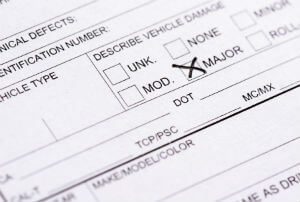
How Police Reports May Play a Role in a Car Accident Case

obtaining a copy of policy report for your claimWhether you are involved in a serious accident or not, one of the most important things to do is calling the authorities to investigate what happened and filing a police report. A copy of the police report is needed if you decide to make a claim to pursue compensation for any injuries or damages caused by the negligent party. The insurance adjuster would need to review this report before an offer is determined.

If you have been hurt in a crash, we recommend reaching out to Sigman Janssen for legal help. A free consultation with our firm will allow you the opportunity to learn about the possible legal options available to you and allow us to answer questions you may have about the claims process.

Beneficial Information in a Police Report

A police report can contain vital information and lead to evidence that may establish the cause of the crash and your resulting injuries as well as how the two are connected. Proving this link is essential to pursue maximum compensation in a car accident case.

Useful information often found in police reports may include:

  • Basic details of the crash – The police report at the very least will contain the date, time and the exact location of the car accident.
  • The other driver’s statement – The responding police officer will talk to you and the other driver involved to uncover what happened and who may potentially be at fault for the crash.
  • Contact details from all parties –  The report will have contact information from the other driver, his or her insurer, and anyone else who may have witnessed the car accident.
  • Narrative of events – The police report will contain the police officer’s narrative of the events that lead up to and caused the crash as well as his or her own conclusions on the incident.
  • Injuries and property damage – The report should contain a written description of the injuries you and the other driver suffered and any damage to vehicles or other property at the scene.
  • Traffic tickets or citations – The officer will report if a traffic ticket or citation was issued. This could be used to help show the other driver was negligent or careless in his or her actions.
  • Pictures and diagrams – The police report may include a diagram of the accident scene or pictures of the accident, injuries and vehicle damage depending on the severity of the crash.
  • Weather and road conditions – The report may also contain details about the weather or road conditions to help show that the other driver was not exercising reasonable care while driving.

If you are in need of quality legal representation, our Appleton car accident attorneys are ready to help determine whether you have a viable case. You may be eligible to seek compensation to help cover medical bills, vehicle repairs, or replacement of your vehicle, as long as you are not found to be more at fault than the party you are making a claim against.

Ways a Police Report Could Impact Your Case

There are numerous ways that a police report could impact your potential car accident case:

Settlement Negotiations

Insurance adjusters look closely at police reports and officers’ observations when evaluating claims. You and your attorney could use the report to help show that the other driver was clearly at fault, which may make it more likely to obtain a fair settlement offer.

Lead to Other Evidence

Although your attorney would conduct a separate investigation, the police report could provide him or her with other evidence, like an additional witness to the crash or another possible at fault party. The report may even help a hired accident reconstruction expert to reenact how the incident unfolded.

Can Police Reports Be Admitted as Evidence?

In a court of law, a police report is generally considered hearsay and therefore cannot be admitted as evidence in most cases. A police report is often inadmissible since the responding police officer did not personally witness the car accident. Notes written in these reports are taken from statements of those involved in the crash.

Although police reports typically cannot be used in a courtroom since they contain the officer’s opinion of what happened, anyone who may have witnessed the crash may be able to testify on your behalf. Statements could potentially be admissible as evidence if the witness testifies about the events he or she observed.

Our Lawyers Are Ready to Help You

If you have been involved in a serious car accident, our lawyers at Sigman Janssen are here to help. We have assisted many accident victims pursue fair and full compensation for their injuries and damages.

An initial consultation is complimentary with zero obligations to take legal action. Should we represent you, there are no upfront fees. You only pay our firm if we help you recover compensation.

Have Questions? We Have Answers. Ph: (877) 888-5201

Reviewed By

James Pitz

Attorney · Sigman Janssen Injury & Disability Lawyers
Licensed Wisconsin Attorney

James Pitz has spent more than three decades practicing civil litigation and personal injury law in Wisconsin, building a career defined by results rather than routine. Since earning admission to the Wisconsin bar in 1993, he has represented over 1,500 clients facing injury, disability, and wrongful death claims, developing a reputation for tenacity against seasoned opposing counsel. He holds a Juris Doctorate from the University of Wisconsin Law School and carries admission to both the Eastern and Western District federal courts in Wisconsin, extending his practice beyond state court. James maintains active standing across the state's leading legal associations, reflecting a career built on sustained engagement with the profession rather than a single credential.

  • J.D., University of Wisconsin Law School
  • Licensed to practice law in Wisconsin since 1993
  • Admitted to the U.S. District Court for the Eastern District of Wisconsin
  • Admitted to the U.S. District Court for the Western District of Wisconsin
  • Member, State Bar of Wisconsin
  • Member, Outagamie County Bar Association
  • Member, American Bar Association
  • Member, Wisconsin Association for Justice

Substance Abuse and Social Security Disability

suffering from medical condition and substance abuseSuffering from a medical condition can be physically, mentally and financially demanding, causing some individuals to turn to drugs or alcohol to cope with their symptoms and limitations. However, substance abuse may stand as a barrier between applicants being able to receive Social Security Disability benefits.

Below, our attorneys at Sigman Janssen discuss how drug addiction and alcoholism may affect a disability claim. If you need help filing a claim or have already received a denial notice, learn how we may be able to help during a free, no-obligation legal consultation. Many applicants are initially denied disability, but you may still be eligible for benefits.

How Substance Abuse Affects a Disability Claim

The Social Security Administration (SSA) cannot refuse to review a disability claim because an individual has a history of alcoholism or drug addiction. However, in certain cases, the continued use of drugs or alcohol could be grounds to deny a claim.

Abusing drugs or alcohol can lead to serious medical conditions and negatively impact your health. It can cause or contribute to heart disease, liver failure, nerve damage, personality disorders, among other health issues. Yet, many applicants may have medical conditions independent of their substance abuse.

The SSA will need to review your claim to assess how your addiction affects your medical condition. If your drug or alcohol use is seen as irrelevant to your condition, you may qualify for disability benefits. On the other hand, if your substance abuse is seen to cause or worsen your condition, you may be disqualified.

Ways the SSA Assesses Drug and Alcohol Use

The SSA uses a six-step process, otherwise known as a drug addiction and alcoholism (DAA) evaluation, to determine whether you may qualify for disability benefits.

  • Is DAA involved in the case? A record of your past and current substance abuse will be taken into consideration. If you have suffered or continue to suffer drug or alcohol abuse, the case moves to step two. There is likely to be a DAA evaluation if the applicant is using illicit or prescription drugs, such as opioids, depressants and stimulants (unless taken as prescribed).
  • Do your impairments, including your DAA, qualify you as disabled? If you fail to meet the SSA’s definition of a disability, despite your drug and alcohol abuse, your claim will be denied. If you are deemed disabled, the case will move forward to step three.
  • Is your drug addiction or alcoholism the only impairment? Drug addiction or alcoholism cannot be your sole disabling condition. If it is, you will not qualify for disability benefits. You must have a physical or mental condition in addition to DAA for the case to move forward to the next step.
  • Are your non-DAA impairments disabling on their own, or are they disabling due to the DAA? If your physical or mental impairments are only disabling because of your substance abuse, the DAA will be considered material and your disability claim will likely be denied.
  • Does the DAA affect or cause your impairments? If the answer is no, DAA is considered irrelevant and will not factor into the SSA’s final decision.
  • Would your impairments be non-disabling if you did not currently suffer from DAA? The sixth step is arguably the most important. The SSA will evaluate whether you would still be disabled if your condition were to improve after you stopped using drugs or alcohol.

An Appleton-based Social Security Disability lawyer is ready to help guide you through this process. We know what it takes to establish that your condition is independent of your drug or alcohol use.

Being Appointed a Representative Payee

If you are approved for disability benefits but the SSA believes you are unable to responsibly manage your finances due to your drug or alcohol use, you may be required to have a representative payee.

The SSA will issue your disability payments to the representative payee, who will be in charge of these funds and prevent you from spending the funds on drugs or alcohol. This individual could be a family member, such as a parent, a friend, someone you trust or a qualified organization.

Schedule a Free Consultation to Get Started

Applicants who work with a lawyer may have a greater chance at being approved for disability benefits than those who do not. Our firm is here to offer advice and answer any questions about Social Security Disability, such as how one is notified after a benefits decision and the first step of the appeals process.

An initial consultation is free of charge and confidential. There is no obligation or upfront fee involved.

Reach out today by calling (877) 888-5201.

Reviewed By

James Pitz

Attorney · Sigman Janssen Injury & Disability Lawyers
Licensed Wisconsin Attorney

James Pitz has spent more than three decades practicing civil litigation and personal injury law in Wisconsin, building a career defined by results rather than routine. Since earning admission to the Wisconsin bar in 1993, he has represented over 1,500 clients facing injury, disability, and wrongful death claims, developing a reputation for tenacity against seasoned opposing counsel. He holds a Juris Doctorate from the University of Wisconsin Law School and carries admission to both the Eastern and Western District federal courts in Wisconsin, extending his practice beyond state court. James maintains active standing across the state's leading legal associations, reflecting a career built on sustained engagement with the profession rather than a single credential.

  • J.D., University of Wisconsin Law School
  • Licensed to practice law in Wisconsin since 1993
  • Admitted to the U.S. District Court for the Eastern District of Wisconsin
  • Admitted to the U.S. District Court for the Western District of Wisconsin
  • Member, State Bar of Wisconsin
  • Member, Outagamie County Bar Association
  • Member, American Bar Association
  • Member, Wisconsin Association for Justice

Will a Personal Injury Settlement Affect My Social Security Disability Benefits?

personal injury settlement and disability benefitsThe short answer is it depends. If you are receiving Social Security Disability Income (SSDI), these benefits generally will not be impacted by a personal injury settlement award, but there may be other things to consider. If you are receiving Supplemental Security Income (SSI), your settlement may cause your benefits to decrease or stop altogether. However, certain things could be done to prevent this. 

Below, Sigman Janssen further discusses this issue. SSI and SSDI are two different Social Security Disability programs. An initial consultation with one of our Oshkosh Social Security Disability lawyers is completely free of charge without any risk or obligation involved. We only get paid if we help you receive benefits. 

Personal Injury Settlements and SSDI Benefits

SSDI benefits should not be affected by an injury settlement, even if the settlement amount is high. Eligibility for this program is based on your work history, not your financial situation.

If you have a qualifying disabling condition, you may be able to receive SSDI benefits with enough work credits. These credits are earned for every quarter that you have been employed. It makes no difference if you suffered a personal injury and obtained compensation for it. Your injury settlement should not have a direct impact on your ability to receive and retain your disability benefits.

With that being said, worker’s compensation and other disability payments may affect eligibility for SSDI and the benefit amount you may be able to receive.

Personal Injury Settlements and SSI Benefits

SSI has different eligibility requirements than SSDI. SSI is a need-based program, which means that qualifying for SSI benefits is based on your income and the assets you own. An injury settlement could cause you to exceed the program’s asset limits ($2,000 for an individual and $3,000 for couples), which could result in your disability benefits being suspended.

However, certain things can be done to try to avoid losing your SSI benefits if you receive a personal injury settlement award. For instance, you could spend the excess funds quickly. If it is done within the first month you receive the lump sum and the funds are spent in an acceptable manner, you may only lose one month of benefits.

Some ways to spend the excess funds that may be acceptable under the Social Security Guidelines are as follows:

  • Pay off your mortgage or a large portion of the mortgage you still owe.
  • Make repairs to your home or modifications to accommodate your disability.
  • Pay off your student loans and other education expenses.
  • Pay off any existing credit card debt.

The biggest downside in spending the excess funds is not having anything left in case of an emergency or other future expenses. Another way to help protect your SSI benefits is placing these funds in a special needs trust. These trusts are designed for individuals with physical and mental disabling conditions and overseen by a third party. Any funds in a special needs trust cannot be counted as income, which could allow you to maintain your eligibility for disability benefits.

Get the Help You Need from an Experienced Lawyer

If you are receiving disability benefits and suffered a personal injury, you should not have to decide between keeping your benefits and obtaining the compensation you need. At Sigman Janssen, we are here to help. An initial consultation with one of our experienced lawyers will allow you to discuss your situation, ask any questions you may have and learn more about the possible options available to you.

Go to our testimonials page to see what some of our satisfied SSD clients have to say about our services.

Give us a call at (877) 888-5201 to get started.

Reviewed By

James Pitz

Attorney · Sigman Janssen Injury & Disability Lawyers
Licensed Wisconsin Attorney

James Pitz has spent more than three decades practicing civil litigation and personal injury law in Wisconsin, building a career defined by results rather than routine. Since earning admission to the Wisconsin bar in 1993, he has represented over 1,500 clients facing injury, disability, and wrongful death claims, developing a reputation for tenacity against seasoned opposing counsel. He holds a Juris Doctorate from the University of Wisconsin Law School and carries admission to both the Eastern and Western District federal courts in Wisconsin, extending his practice beyond state court. James maintains active standing across the state's leading legal associations, reflecting a career built on sustained engagement with the profession rather than a single credential.

  • J.D., University of Wisconsin Law School
  • Licensed to practice law in Wisconsin since 1993
  • Admitted to the U.S. District Court for the Eastern District of Wisconsin
  • Admitted to the U.S. District Court for the Western District of Wisconsin
  • Member, State Bar of Wisconsin
  • Member, Outagamie County Bar Association
  • Member, American Bar Association
  • Member, Wisconsin Association for Justice

Establishing Liability for an Accident When Merging or Changing Lanes

merging or changing lanes on wisconsin roadwaysMerging onto a highway or changing lanes on a busy road can be quite dangerous. Drivers may speed up or not use their turn signals when approaching multi-lane roads or when switching lanes. Unfortunately, these actions could potentially result in an accident, causing serious injuries and significant property damage.

Read on to learn more about how liability in these accidents is established and what damages you may be able to obtain compensation for. Do not hesitate to contact a Green Bay auto accident attorney from our firm to schedule a free and confidential consultation to discuss your claim further.

Why a Merging or Lane-Change Accident Occurs

Accidents when merging or changing lanes can occur for many different reasons. Drivers could misjudge the distance between cars or the nearest car to merge or enter a lane. Drivers could also fail to safely merge into traffic, causing them crash into another car.

Other ways an accident can occur when merging or changing lanes include:

  • Merging too slowly or quickly from the on-ramp
  • Changing lanes but failing to use a turn signal
  • Going across multiple lanes of traffic at one time
  • Cutting off other cars

These accidents can cause a variety of injuries, including:

  • Whiplash
  • Fractures
  • Spinal cord injuries
  • Cuts and lacerations
  • Brain trauma

Who Could Potentially Be Held Liable?

In most cases, the driver merging or changing lanes is deemed liable in an accident. Wisconsin law states that a driver entering a highway are required to yield the right-of-way to all approaching cars already traveling on the highway.

This means that drivers merging onto U.S. 141 or I-41 in the Green Bay area and elsewhere in the state do not have the right-of-way and are required to adjust their speed to find a safe gap in traffic.

Driver who do not drive at the appropriate speed or hit others car already in a traffic lane could potentially be held liable for any accidents that cause injuries and damages.

However, there are a few exceptions. For instance, a driver may have been aggressive and purposely hit a merging driver because he or she believed the driver was cutting him or her off.  A driver may have been changing lanes at the same time another car was also attempting to merge.

Additional exceptions may include drivers speeding, driving in a distracted state or driving while under the influence of drugs or alcohol. More than one driver could be liable in these situations.

Not every accident is the same, which is why it is in your best interest to have your claim evaluated by an experienced lawyer. He or she can help determine the cause and liability associated with the crash.

Avoiding a Crash When Merging or Changing Lanes

As a matter of public safety and courtesy, Wisconsin drivers on multi-lane roads are encouraged to change lanes or adjust their speed to create space for merging cars, but it is not a legal requirement.

When merging onto a highway, you should try to be at or near the speed of approaching cars, use your turn signal and avoid squeezing into a gap in traffic because it gives other cars less time to react.

Most accidents happen when drivers try to force their way into traffic instead of yielding the right-of-way. To help avoid being involved in a merging or lane-change accident, be sure to:

  • Use your turn signal to show your intent to merge or change lanes
  • Gradually merge or change lanes to not startle other drivers
  • Switch lanes to get out of the merging lane if you have space to do so
  • Maintain a safe distance to allow other drivers to merge or change lanes

Speak to a Licensed Attorney Today

If you have been injured in an accident, our attorneys at Sigman Janssen are available to assist you. We are ready to investigate what happened, establish who was most likely liable and handle all communications and negotiations with the insurance company to seek fair compensation for you.

An initial consultation is 100 percent free with no obligation to move forward. We charge nothing up front to utilize our services and only get paid if we help you obtain compensation.

Sigman Janssen. A Firm You Can Trust. Ph: (877) 888-5201

Reviewed By

James Pitz

Attorney · Sigman Janssen Injury & Disability Lawyers
Licensed Wisconsin Attorney

James Pitz has spent more than three decades practicing civil litigation and personal injury law in Wisconsin, building a career defined by results rather than routine. Since earning admission to the Wisconsin bar in 1993, he has represented over 1,500 clients facing injury, disability, and wrongful death claims, developing a reputation for tenacity against seasoned opposing counsel. He holds a Juris Doctorate from the University of Wisconsin Law School and carries admission to both the Eastern and Western District federal courts in Wisconsin, extending his practice beyond state court. James maintains active standing across the state's leading legal associations, reflecting a career built on sustained engagement with the profession rather than a single credential.

  • J.D., University of Wisconsin Law School
  • Licensed to practice law in Wisconsin since 1993
  • Admitted to the U.S. District Court for the Eastern District of Wisconsin
  • Admitted to the U.S. District Court for the Western District of Wisconsin
  • Member, State Bar of Wisconsin
  • Member, Outagamie County Bar Association
  • Member, American Bar Association
  • Member, Wisconsin Association for Justice

Determining Fault for an Accident Due to a Sudden Medical Emergency

driving having a sudden medical emergencyDetermining fault is rather straightforward in most car accidents. A driver may have been speeding and caused a crash. However, when a driver suffers a medical emergency before the accident, such as a heart attack, seizure or stroke, liability in these situations may not be so simple.

Our attorneys at Sigman Janssen discuss sudden medical emergencies in Wisconsin and how fault may be assigned. An initial consultation is free of charge to learn more about your potential legal options.

What Is the Emergency Doctrine and When Does It Apply?

Many states recognize the sudden medical emergency defense. In Wisconsin, the emergency doctrine can relieve a driver from liability when that driver is faced with a sudden medical emergency he or she did not create. For example, the emergency doctrine may apply if you are driving down the road and suddenly have a stroke that causes you to black out and results in you causing a serious car accident.

The reasoning behind this defense is that a person with a sudden unexpected medical emergency is not negligent and as such, cannot be held accountable for the accident. The medical emergency was beyond the driver’s control and was nothing that he or she could have foreseen (unless the driver knew or had forewarning about his or her condition and decided to ignore it).

Should a driver effectively utilize the emergency doctrine defense, he or she may be not financially liability for any injuries and damages they caused. An Appleton-based car accident lawyer from our firm is ready to offer legal assistance if you have been in a car accident and the other driver is trying to use this defense.

Establishing the Medical Emergency Was Sudden

For a medical emergency to be sudden, it must have overcome the driver and rendered him or her unable to avoid the accident.

If a driver experienced signs or symptoms indicative of a medical emergency, it is his or her responsibility to pull over to protect himself or herself and others from danger on the roadway.

However, if the driver decided to ignore his or her symptoms or failed to pull over and it results in a crash, the driver may be found at fault for any injuries and damages they caused.

Establishing If the Medical Condition Was Foreseeable

In determining if the accident was due to a sudden medical emergency, the driver’s medical records must be reviewed. For instance, say a driver suffered a heart attack and lost consciousness. Without a known history of heart problems or a prior heart attack, the driver had no reason to suspect one.

On the other hand, say a driver is diabetic and knows that he or she must regularly monitor his or her blood sugar. Regardless, the driver fails to check his or her blood sugar levels and passes out behind the wheel. The driver will not be able to use this defense since his or her medical condition was foreseeable.

Having an experienced lawyer by your side can be beneficial in these cases. He or she can help you obtain the other driver’s medical records, have the records reviewed by a qualified physician, depose the other driver’s treating doctors and have the other driver examined by a medical expert you choose.

Get Help You Need After a Car Accident

Have you been injured in a car accident with a driver who claims to have had a sudden medical emergency? If so, Sigman Janssen is here to help. We have recovered millions in compensation for our clients and are prepared to investigate and gather the evidence needed to build a strong case for you.

Set up a free legal consultation to get started. There is no risk in calling us to learn more about your rights and no upfront fees to utilize our services. We only get paid if you do.

Millions Recovered for Car Accident Victims. Ph: (877) 888-5201

Reviewed By

James Pitz

Attorney · Sigman Janssen Injury & Disability Lawyers
Licensed Wisconsin Attorney

James Pitz has spent more than three decades practicing civil litigation and personal injury law in Wisconsin, building a career defined by results rather than routine. Since earning admission to the Wisconsin bar in 1993, he has represented over 1,500 clients facing injury, disability, and wrongful death claims, developing a reputation for tenacity against seasoned opposing counsel. He holds a Juris Doctorate from the University of Wisconsin Law School and carries admission to both the Eastern and Western District federal courts in Wisconsin, extending his practice beyond state court. James maintains active standing across the state's leading legal associations, reflecting a career built on sustained engagement with the profession rather than a single credential.

  • J.D., University of Wisconsin Law School
  • Licensed to practice law in Wisconsin since 1993
  • Admitted to the U.S. District Court for the Eastern District of Wisconsin
  • Admitted to the U.S. District Court for the Western District of Wisconsin
  • Member, State Bar of Wisconsin
  • Member, Outagamie County Bar Association
  • Member, American Bar Association
  • Member, Wisconsin Association for Justice

What Should I Expect at a Disability Hearing to Appeal My Case?

disability hearing before an administrative law judgeIf you were denied disability benefits and unable to get a claims examiner to reconsider your application, the second step of the appeals process is a hearing before an administrative law judge (ALJ). The ALJ will independently consider any new and existing evidence submitted and the testimony you provide at the hearing to make a decision in awarding you disability benefits.

Our experienced lawyers at Sigman Janssen have helped many disability applicants argue their cases in front of a judge and prepared them for the different questions that may be asked. Knowing what to expect at a disability hearing may improve your chances of receiving approval.

Requesting a Social Security Disability Hearing

You can request a disability hearing online, download and send in the forms or write a letter to your local Social Security field office. All requests must be writing and you must appeal within 60 days after receiving your reconsideration denial notice.

Prior to a hearing, you may be asked to provide additional medical evidence or clarify information in your disability claim. The ALJ assigned to conduct the hearing will have had no part in the original decision or reconsideration phase.

When and Where Disability Hearings Take Place

The wait time from the date the hearing was requested to the date of the hearing can take several months, depending on how long the backlog is in your area. In Wisconsin, the average wait time is between seven to eight months. You will be notified by letter of your hearing location, date and time at least 75 days before your hearing.

Disability hearings are not similar to regular courtroom hearings. They are less formal, not open to the public and are often held in small conference rooms.

*** IMPORTANT NOTICE ***

Due to the COVID-19 pandemic, currently all hearings are being held by telephone.

In certain cases, a hearing may be done via video conferencing rather than in person. Those in attendance will include you, your representative (such as a lawyer), the ALJ, a hearing assistant to record the proceedings and one or two expert witnesses.

Your hearing will generally be held within 75 miles of your home. A typical disability hearing is also shorter, lasting between fifteen minutes to an hour.

Having Representation at a Disability Hearing

You have a right to be represented by an attorney at a disability hearing. Disability claimants who have legal representation are more likely to receive a favorable outcome than those without representation.

A licensed Appleton Social Security Disability attorney is ready to help prepare you for the hearing and be there to guide you through the hearing. This includes gathering and accessing your medical records if they need updating and obtaining a written opinion from your treating doctor(s) detailing your condition and limitations. We can also help you practice answering questions the ALJ might ask.

The Judge Will Ask For Your Testimony

During the hearing, the ALJ will ask you to provide testimony about your disability and employability. The Judge or your attorney questions concerning your medical issues, treatment provided, previous work history, educational background and how your condition has impacted your life.

You must also be prepared to discuss any limitations caused by your condition. It is important to answer honestly without exaggerating or minimizing your medical issues. Try to provide specific examples of how your condition impacts your ability to perform daily activities.

The ALJ may even ask for testimony from the expert witnesses as well to provide details about your disability and your ability to work despite your medical issues. The ALJ is simply trying to obtain all the necessary facts to make a decision on whether or not you are eligible to receive disability benefits.

Your Representative Will Argue Your Case at the Hearing

If you have an attorney, he or she will present your case at the hearing. A good attorney should order all medical records you identify to prepare for the hearing and he or she should draft a Pre-Hearing Legal Brief and submit it for the Judge’s review before the hearing. He or she should also be prepared to ask you questions to further show the ALJ how disabling your condition is. Your attorney’s main goal is to get your disability claim approved.

Receiving a Decision After Hearing is Held

You will not receive a decision on the date of your hearing. It can take up to three months, or occasionally longer to be notified of the ALJ’s decision. Generally, you will receive a written decision through the mail outlining the findings of the case and the reasons for the decision. If approved, you will receive a notice of award letter detailing your benefit amounts and the date your benefits will begin.

Otherwise, you can continue to appeal the decision by asking the Social Security Appeal’s Council to review your claim.

Learn How We May Be Able to Assist You

Attending a disability hearing before an ALJ can be stressful and intimidating, but you do not have to do it alone. Our attorneys at Sigman Janssen have decades of combined experience attending hearings and preparing clients for what to expect. We are ready to guide you through this process and advocate for your best interests. Schedule your free initial consultation to get started.

Call (877) 888-5201 for legal assistance.

Reviewed By

James Pitz

Attorney · Sigman Janssen Injury & Disability Lawyers
Licensed Wisconsin Attorney

James Pitz has spent more than three decades practicing civil litigation and personal injury law in Wisconsin, building a career defined by results rather than routine. Since earning admission to the Wisconsin bar in 1993, he has represented over 1,500 clients facing injury, disability, and wrongful death claims, developing a reputation for tenacity against seasoned opposing counsel. He holds a Juris Doctorate from the University of Wisconsin Law School and carries admission to both the Eastern and Western District federal courts in Wisconsin, extending his practice beyond state court. James maintains active standing across the state's leading legal associations, reflecting a career built on sustained engagement with the profession rather than a single credential.

  • J.D., University of Wisconsin Law School
  • Licensed to practice law in Wisconsin since 1993
  • Admitted to the U.S. District Court for the Eastern District of Wisconsin
  • Admitted to the U.S. District Court for the Western District of Wisconsin
  • Member, State Bar of Wisconsin
  • Member, Outagamie County Bar Association
  • Member, American Bar Association
  • Member, Wisconsin Association for Justice

Can I Pursue Compensation for PTSD After a Car Accident?

car accident victim receiving treatment for PTSDAfter a car accident, victims can suffer various physical injuries, from lacerations or broken bones to more serious, debilitating injuries impacting the brain or spinal cord.

Aside from physical harm, the shock and devastation caused by serious car accidents can also lead to emotional trauma. Victims may experience post-traumatic stress disorder (PTSD), which can negatively affect their everyday lives and relationships with spouses, friends, family members and co-workers.

Our reputable car accident lawyers in Appleton are prepared to determine your options for pursuing compensation for the emotional trauma you have experienced and any other injuries that have affected your life. Our initial consultations are free and confidential. You are not obligated to take legal action.

Damaging Effects of PTSD

PTSD is a mental health condition that can occur after experiencing a traumatic or stressful event. This includes serious car accidents. PTSD can have lasting, painful effects on a victim’s life. He or she may be struggling to function at home or work, or unable to maintain personal and intimate relationships.

Some factors that could increase the risk of PTSD for car accident victims include:

  • The nature of the crash was particularly severe
  • The victim suffered a critical or life-threatening injury
  • The victim felt his or her life was in danger during the accident
  • The victim witnessed the death of a loved one or another party
  • The victim has previously experienced a traumatic or stressful event

Car accident victims struggling with PTSD may require extensive therapy for these issues. Treatment may be ongoing and involve taking medications to help address anxiety, depression or other issues.

If left untreated, PTSD can lead to major depression, drug abuse, alcoholism or self-destructive acts.

Identifying PTSD Symptoms After a Crash

PTSD symptoms victims may have after a crash include, but are not limited to:

  • General fear and anxiety – An accident victim may have unwanted thoughts that can be overwhelming and will not go away without getting treatment.
  • Reliving the crash and thinking about it often – The victim may avoid any reminder of the crash by not driving or even riding in a car. He or she may take a longer route going home or to work in order to avoid driving through or near the accident scene.
  • Excessively worrying, feeling angry or irritable – An accident victim may have difficultly being able to relax since he or she is constantly anticipating danger. As a result, his or her senses are on high alert and could leave him or her drained of energy and fatigued.
  • Nightmares, trouble sleeping and restlessness – The victim may have issues sleeping or having nightmares, leading to exhaustion and causing havoc on his or her mental state.

Many of these symptoms are not always immediately apparent after a car accident. According to the National Institute of Mental Health, it could take up to three months to start experiencing PTSD symptoms and sometimes it may take longer.

In Wisconsin, PTSD can be diagnosed by a licensed clinical social worker, a psychologist, or a psychiatrist. To meet the criteria for PTSD, symptoms must last longer than a month and be severe enough to interfere with a victim’s daily life and relationships.

That is why it is vital to receive medical care as soon as possible and then consult with an experienced lawyer to help assess the damages you have suffered due to PTSD.

Pursuing Compensation for PTSD

Your lawyer will take into consideration not just your physical injuries, but also the emotional trauma you have experienced due to the crash.

To seek compensation for PTSD, negligence must have played a role. Another person’s negligent actions or inactions must have been the direct cause your injuries and the damages you have suffered.

You and your lawyer will need supportive evidence, such as a PTSD diagnosis from your treating doctor(s), medical bills related to your treatment and receipts for prescription medications. You must also show how having PTSD has impacted your ability to work and make a living.

Keeping a journal documenting your experiences and the ways it has limited you from interacting with others and doing certain activities you once enjoyed could help build a strong case for compensation.

Based on your circumstances, you may be eligible for financial compensation to cover mental health services, lost income or ongoing medical care as long as you file within three years from the date of the accident. Otherwise, the court may dismiss the case.

Our Firm is Ready to Help

The lawyers at Sigman Janssen are ready to help recover the maximum compensation possible after suffering PTSD from a serious car accident. If you were injured by a negligent driver, schedule a free case evaluation today. We work on a contingency fee basis, so there are no upfront fees for our services. Our firm only receives payment at the end of the legal process if we obtain a settlement or verdict for you.

Legal Help You Can Trust. Ph: (877) 888-5201

Reviewed By

James Pitz

Attorney · Sigman Janssen Injury & Disability Lawyers
Licensed Wisconsin Attorney

James Pitz has spent more than three decades practicing civil litigation and personal injury law in Wisconsin, building a career defined by results rather than routine. Since earning admission to the Wisconsin bar in 1993, he has represented over 1,500 clients facing injury, disability, and wrongful death claims, developing a reputation for tenacity against seasoned opposing counsel. He holds a Juris Doctorate from the University of Wisconsin Law School and carries admission to both the Eastern and Western District federal courts in Wisconsin, extending his practice beyond state court. James maintains active standing across the state's leading legal associations, reflecting a career built on sustained engagement with the profession rather than a single credential.

  • J.D., University of Wisconsin Law School
  • Licensed to practice law in Wisconsin since 1993
  • Admitted to the U.S. District Court for the Eastern District of Wisconsin
  • Admitted to the U.S. District Court for the Western District of Wisconsin
  • Member, State Bar of Wisconsin
  • Member, Outagamie County Bar Association
  • Member, American Bar Association
  • Member, Wisconsin Association for Justice

Liability for Collisions With Vehicles Parked on the Shoulder

vehicle in an emergency situation parked on shoulderEmergencies can happen when behind the wheel that may make a driver need to pull over onto the shoulder. Emergency responders and maintenance personnel are also often seen along the side of the road rendering aid to a stopped or stranded vehicle. However, this is one of the most dangerous areas for anyone to be parked in. Many people are injured or killed in crashes each year by passing motorists.

To help mitigate these risks, the Wisconsin Department of Transportation requires that all drivers follow the “Move Over Law”, created to protect law enforcement officers, emergency responders, tow truck operators and highway maintenance workers traveling along the state’s roadways.

Our attorneys at Sigman Janssen further explain the significance of this law and what your potential legal options are if you are injured in a collision by a negligent driver while parked on the side of the road. An initial consultation is completely free and confidential with no obligation to hire our firm.

Understanding Wisconsin’s “Move Over Law”

Wisconsin’s “Move Over Law” helps safeguard stopped emergency vehicles, which is particularly important over the winter months. Emergency workers often work in heavy snow and ice as these conditions can lead to an increased risk of collisions and stalled vehicles on either side of the road.

If a vehicle is on the side of the road with its emergency lights flashing, a driver must move out of the lane closest to the vehicle. Drivers on a four-lane roadway are required to provide a safety zone for a stopped squad car, ambulance, fire truck, utility vehicle, tow truck or highway maintenance vehicle.

Two-lane roadways often increase the risk of a crash because there is less space for a vehicle to move over due to oncoming traffic. If a driver cannot safely change lanes, he or she must slow down to a safe speed for traffic conditions, driving at a reduced speed until passing the emergency vehicle. This allows drivers to better maintain control of their vehicles if they need to quickly slow down or stop for someone who is stepping in and out of a vehicle parked on the shoulder.

Penalties for Drivers Who Fail to Follow This Law

If a driver receives a ticket for violating this law, it will result in a $249 fine and three demerit points on his or her driving record.

If the violation results in a crash, it will result in a suspended driver’s license and if a person is injured or killed, the at-fault driver could be imprisoned for up to seven years.

If You Are in an Emergency Situation

Should you need to pull over due to an emergency, be sure to do so safely. Here are some tips to lower the risk of an accident:

  • Use your hazard lights to warn other drivers that something is wrong with your vehicle
  • Check for traffic on the roadway to avoid causing a collision while pulling over
  • Pull over as far to the side of the road as possible without blocking a lane of traffic
  • Keep your hazard lights on even after you have parked on the shoulder
  • Stay in your vehicle until help arrives, or if you must exit the vehicle, check carefully for oncoming traffic to make a safe exit
  • Remain alert for traffic or other potential hazards on the roadway until help arrives

Potential Legal Options for Injured Victims

An car accident attorney in Oshkosh from our firm is prepared to help hold a negligent driver liable for any injuries and damages he or she caused you to suffer in a crash.

You may be eligible to pursue a claim against the at-fault driver for medical-related expenses, property damage, lost income from an inability to work, and/or pain and suffering damages.

If a settlement cannot be reached, we are also prepared to head to court, if it is absolutely necessary.

The statute of limitations to take legal action for most car accident cases is generally three years from the date of the crash. Waiting too long to file will likely result in a court dismissal.

Our Firm is Available to Help 24/7

If you have been involved in a collision, discuss your situation with a member of our legal team today. We are ready to protect your rights and best interests every step of the way. We have obtained millions of dollars for our clients and look forward to seeking maximum compensation on your behalf.

There is no risk in calling us to set up a free case review, no obligation to retain our services, and no upfront fees while working on a case. Contact our offices anytime, 24 hours a day, seven days a week.

Sigman Janssen. Decades of Experience. (877) 888-5201

Reviewed By

James Pitz

Attorney · Sigman Janssen Injury & Disability Lawyers
Licensed Wisconsin Attorney

James Pitz has spent more than three decades practicing civil litigation and personal injury law in Wisconsin, building a career defined by results rather than routine. Since earning admission to the Wisconsin bar in 1993, he has represented over 1,500 clients facing injury, disability, and wrongful death claims, developing a reputation for tenacity against seasoned opposing counsel. He holds a Juris Doctorate from the University of Wisconsin Law School and carries admission to both the Eastern and Western District federal courts in Wisconsin, extending his practice beyond state court. James maintains active standing across the state's leading legal associations, reflecting a career built on sustained engagement with the profession rather than a single credential.

  • J.D., University of Wisconsin Law School
  • Licensed to practice law in Wisconsin since 1993
  • Admitted to the U.S. District Court for the Eastern District of Wisconsin
  • Admitted to the U.S. District Court for the Western District of Wisconsin
  • Member, State Bar of Wisconsin
  • Member, Outagamie County Bar Association
  • Member, American Bar Association
  • Member, Wisconsin Association for Justice

Can I Get Worker’s Comp Benefits If My Injury Was Self-Inflicted?

worker harming themselves by accidentIf you have been injured on the job, you may be able to get worker’s comp benefits to help cover reasonable medical expenses and disability/wage loss while in recovery. But what happens when a worker causes his or her own injuries? In certain cases, these injuries could still be covered under the Wisconsin worker’s compensation system.

Our legal team at Sigman Janssen has helped many injured workers obtain the benefits they need. Our initial consultations are completely free and come with no risk or obligation to have us represent you.

Worker’s Compensation is a No-Fault System

Wisconsin worker’s compensation is a no-fault system, which means you could recover benefits for a job-related injury regardless of who was at fault. Employees injured during the course and scope of their employment are typically covered by their employer’s worker’s compensation insurance.

However, some employees may be concerned about not being able to qualify for worker’s comp benefits if their injury was self-inflicted.

Under Wisconsin law, a self-inflicted injury may be covered if it was accidental and not intentional. Intentional means that the injury was inflicted with the mindset of causing self-harm. Intentionally inflicting harm is generally not considered within the scope of employment and therefore, non-compensable. However, an employer must prove that the injury was intentional when it occurred.

Self-Inflicted Injuries Due to a Mistake or General Negligence

Sometimes an employee injures himself or herself by accident. Accidents can happen in any type of work. This does not mean an employee cannot obtain worker’s comp benefits because he or she contributed to the accident. Injuries due to an error or mistake could still be covered by worker’s compensation system. This includes general negligence, such as an employee being ignorant of proper safety protocols.

If your employer or his or her insurance company tries to use your fault as a reason to deny your worker’s comp claim, having an experienced lawyer on your side would be beneficial. He or she can help you gather the evidence needed to show that your injury occurred at work, even if it was your fault.

Self-Inflicted Injuries Due to Misconduct or Gross Negligence

An employee will have a harder time obtaining worker’s comp benefits if he or she was injured due to misconduct or gross negligence. In other words, incidents caused by acting against company policy.

This may include:

  • Working while impaired by drugs or alcohol
  • Blatantly not following safety regulations
  • Purposely misusing dangerous machinery or equipment
  • Fighting or otherwise engaging in horseplay

If your misconduct is deemed outside of your work duties, any resulting injuries may not be covered.

Injuries Covered by Wisconsin Worker’s Compensation

Worker’s comp covers most job-related injuries. The Wisconsin worker’s compensation system defines an injury as being any physical or mental harm resulting from a workplace accident or occupational disease. This can include damage to artificial limbs as well as dental damage.

Examples of physical harm could be broken bones, fractures, crushing injuries, burns, full or partial paralyses and disfigurement. Examples of mental harm could be a nervous disorder, traumatic neurosis and hysteria. If the injury is mental without physical trauma, you and your lawyer will need to prove that it was caused by something more than stress and tensions experienced by employees each day.

What if a Self-Inflicted Injury Results in Death?

If an employee willfully inflicted self-harm and it results in death, his or her employer will not be liable to pay death benefits to the family. Self-inflicted injuries, including suicide in extreme cases, are incidents generally considered not in the scope of employment.

However, the family of a deceased employee may be compensated if a chain of causation can be proven between the injury and the act that resulted in death. A job-related injury must have dominated the employee’s mind to make it devoid of normal judgement and cause the act to happen.

For example, an employee injured in an industrial accident had pain so severe death was the only relief possible. A preexisting injury that was made worse by the job may also lead to self-harm.

Set Up a Free Initial Consultation Today

To learn if you have a valid claim, set up a free initial consultation with a licensed Appleton worker’s compensation lawyer from our firm today. We are available anytime to guide you through the worker’s compensation process to help you recover the benefits you need.

There is no risk in calling us to learn more about your rights and no obligation to move forward after meeting with us. We do not receive payment for our legal services unless you obtain a recovery.

Sigman Janssen. A Firm You Can Trust. Ph: (877) 888-5201

Reviewed By

James Pitz

Attorney · Sigman Janssen Injury & Disability Lawyers
Licensed Wisconsin Attorney

James Pitz has spent more than three decades practicing civil litigation and personal injury law in Wisconsin, building a career defined by results rather than routine. Since earning admission to the Wisconsin bar in 1993, he has represented over 1,500 clients facing injury, disability, and wrongful death claims, developing a reputation for tenacity against seasoned opposing counsel. He holds a Juris Doctorate from the University of Wisconsin Law School and carries admission to both the Eastern and Western District federal courts in Wisconsin, extending his practice beyond state court. James maintains active standing across the state's leading legal associations, reflecting a career built on sustained engagement with the profession rather than a single credential.

  • J.D., University of Wisconsin Law School
  • Licensed to practice law in Wisconsin since 1993
  • Admitted to the U.S. District Court for the Eastern District of Wisconsin
  • Admitted to the U.S. District Court for the Western District of Wisconsin
  • Member, State Bar of Wisconsin
  • Member, Outagamie County Bar Association
  • Member, American Bar Association
  • Member, Wisconsin Association for Justice

What Changes Are Coming to the Social Security Program in 2021?

social security program changes for 2021Every year in the fall, the Social Security Administration (SSA) announces its annual changes to the Social Security program, providing updates on income limits, benefit amounts and more for recipients. It is important to stay fully informed with Social Security’s changes in 2021 so you know what is expected to be paid and what it takes to continue qualifying for disability benefits.

If you need help with the initial application process or the appeals process after being denied benefits, reach out to an Appleton Social Security Disability lawyer from our firm today.  A consultation to learn more about your rights and options is free of charge and comes with no obligation to retain our services.

Cost-of-Living Adjustment (COLA)

The cost-of-living adjustment (COLA) is considered a raise that Social Security recipients are expected to receive for the upcoming year to help keep their benefits on par with inflation. The COLA has averaged 1.4 percent per year within the past decade. 

In 2021, about 70 million Social Security Disability Insurance (SSDI) and Supplemental Security Income (SSI) recipients will see a 1.3 percent increase to their monthly benefits. Compared to last year, it is less than the COLA for 2020 at 1.6 percent and at 1.3 percent is tied for the second-smallest COLA in history.

However, for the average Social Security recipient, the 1.3 percent raise will translate to an extra $20 per month with an estimated monthly payout of $1,543.

To receive SSI benefits, your assets and income must not be worth more than the resource limit, which is $2,000 for an individual and $3,000 for a couple. The monthly maximum federal amount for 2021 is $794 for an eligible individual and $1,191 for an eligible couple.

Additional increases to Social Security benefits include:

  • A payment increase of $16 per month (from $1,261 to $1,277) for the average disabled worker
  • A payment increase of $20 per month (from $1,523 to $1,543) for the average retired worker
  • A payment increase of $30 per month (from $2,563 to $2,596) for the average aged couple, both receiving benefits

Payroll Tax Earnings

One of the biggest changes next year is an increase in the payroll tax earnings cap. Workers were required to pay a 6.2 percent Social Security tax in 2020 with their employer matching that payment on income up to $137,700. Any income earned above that limit is not subject to the tax.

For 2021, the tax rate will remain the same at 6.2 percent for employees (12.4 percent for those self-employed), but the income cap has increased by $5,100 to $142,800. This means that all earned income up to this amount will be taxable, which will affect approximately 6 percent of workers nationwide.

Income Limits for Disability Benefits

To qualify for disability benefits, you must demonstrate that you are unable to engage in any substantial gainful activity (SGA). Generally, you are engaging in SGA when you earn more than a certain monthly amount, which will vary based on the severity of your disability.

Blind SSDI recipients can earn up to $2,190 a month in 2021 without having their benefits stopped (SGA does not apply to blind SSI recipients). This is an increase of $80 per month or $960 extra annually.

Non-blind recipients can also earn up to $1,310 a month starting next year without losing their SSDI or SSI benefits. This is an increase of $50 per month or an extra $600 on an annual basis.

If you receive SSDI, the trial work period (TWP) is a work incentive that allows you to test your ability to work for at least nine months. During the TWP, you can receive your full benefit payments no matter how much you earn, provided you report your work activity and continue to meet the SSA’s rules for disability. In 2021, any month during which you earn over $940 will count toward your TWP.

Student Earned Income Exclusion

The student earned income exclusion is another work incentive that allows certain SSI recipients who are under age 22 and regularly going to school to exclude earnings from income. This allows students to keep more of their SSI benefits when they work.

In 2021, this means that the SSA will not count as much as $1,930 of earned income per month while attending school and working. The maximum yearly exclusion is $7,770. 

Social Security Retirement Age

Full retirement age is set to increase in 2021 by two months, to 66 years and 10 months for those born in 1959. Social Security’s full retirement age will peak at age 67 in 2022 for anyone born in 1960 or later.

Age 62 is the earliest a recipient can claim retirement benefits. However, claiming early retirement benefits will result in a permanent reduction to your monthly payouts. Failing to collect Social Security past your full retirement age will mean being able to collect more than your normal payout.

For instance, if you wait to claim retirement benefits until age 70, you could get a 32 percent higher annual payout than if you started receiving benefits at full retirement age.

Reach Out to Our Firm for More Information

At Sigman Janssen, we understand how important Social Security Disability benefits are for recipients and their loved ones. Our lawyers have extensive experience dealing with the SSA and its strict regulations and policies. We are prepared to help you apply or appeal a denied disability claim.

There is also no risk in reaching out to learn if any of these changes to the Social Security program will affect your ability to maintain your disability benefits. Our firm is available anytime, day or night, to take your call. An initial consultation is free and there are no upfront fees to have us represent you.

Decades of Experience Helping Wisconsin Residents. Ph: (877) 888-5201

Reviewed By

James Pitz

Attorney · Sigman Janssen Injury & Disability Lawyers
Licensed Wisconsin Attorney

James Pitz has spent more than three decades practicing civil litigation and personal injury law in Wisconsin, building a career defined by results rather than routine. Since earning admission to the Wisconsin bar in 1993, he has represented over 1,500 clients facing injury, disability, and wrongful death claims, developing a reputation for tenacity against seasoned opposing counsel. He holds a Juris Doctorate from the University of Wisconsin Law School and carries admission to both the Eastern and Western District federal courts in Wisconsin, extending his practice beyond state court. James maintains active standing across the state's leading legal associations, reflecting a career built on sustained engagement with the profession rather than a single credential.

  • J.D., University of Wisconsin Law School
  • Licensed to practice law in Wisconsin since 1993
  • Admitted to the U.S. District Court for the Eastern District of Wisconsin
  • Admitted to the U.S. District Court for the Western District of Wisconsin
  • Member, State Bar of Wisconsin
  • Member, Outagamie County Bar Association
  • Member, American Bar Association
  • Member, Wisconsin Association for Justice